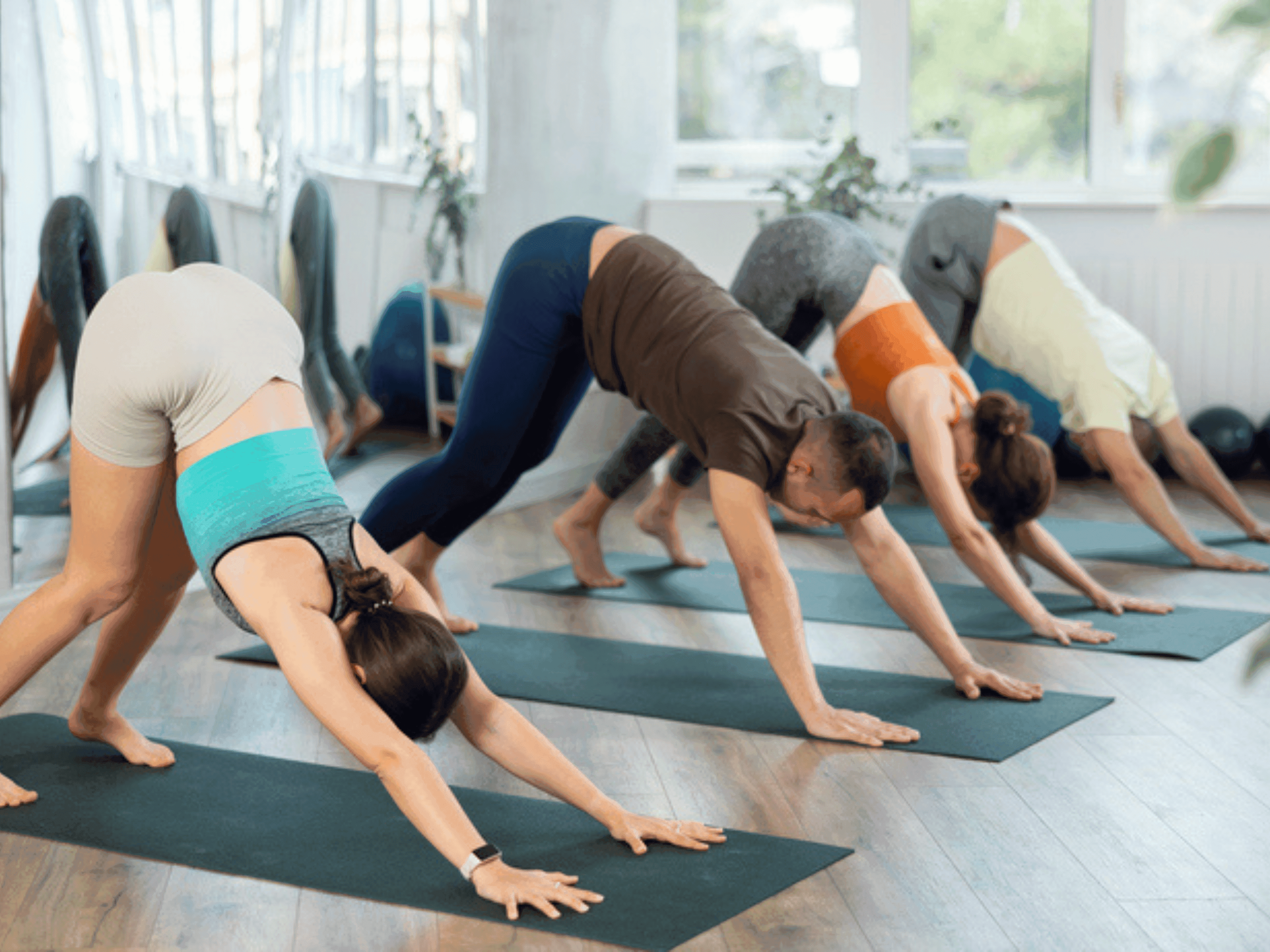
(6 Min Read) Yoga appears controlled and low impact. In many poses you move slowly, avoiding sudden force. That impression leads some people to practise alone or use short online videos. Others return after a long break without guidance. Those choices can increase the risk of self-injury through small errors that can be repeated.
Most yoga-related injuries build gradually through continuous strain and poor joint positioning instead of occurring in a single moment. Repeated pressure without enough support then makes it worse. Many people continue practising because the discomfort feels manageable at first. Without any feedback, it can take time before they realise that something in their approach needs to change.
Professional instruction reduces this risk by correcting technique early and helping people regulate the intensity of their practice. External observation and clear correction help people move with more control and awareness.
How self-injury develops during yoga practice
Self-injury in yoga usually refers to harm caused by how movements are performed. Muscle strain and joint irritation can develop when someone forces or places uneven pressure through joints. Repeating the same movements without variation increases this stress.
These issues appear in the wrists, shoulders, knees and lower back. Forward folds and weight-bearing poses place sustained demand on these areas.
Without instruction, people rely on how a pose looks or how flexible they feel. That approach can mask poor positioning and allow strain to accumulate. People who search for yoga classes near them should prioritise qualified supervision over convenience alone.
Why beginners face higher risk without guidance
Beginners commonly lack clear body awareness. They may not notice uneven weight distribution or joint collapse. Breath holding can also occur. They also tend to copy shapes and positions they see on social media, which can lead to forcing themselves into positions that do not suit their current strength or mobility.
Yoga beginners learn how a pose should feel when it is stable and controlled. Teachers give clear verbal instruction that supports safe movement and show alternatives when a posture does not fit someone’s body. That guidance helps people build good habits early, which reduces the chance of ongoing discomfort.
Without that foundation, beginners regularly repeat the same errors and build patterns that are difficult to undo later. Some respond by trying more yoga, assuming volume will correct the issue without adjusting technique.
What risks should you consider when returning to yoga after a break?
People returning after time away can feel confident because they remember some of the poses. Their joints may still move well, but their stabilising strength can drop during periods of inactivity. That gap between mobility and strength can place extra stress on ligaments and tendons.
A guided session helps returning practitioners rebuild control before they increase intensity. Teachers slow the pace and adjust sequencing. They also suggest modifications that protect vulnerable areas. This support reduces the chance of setbacks that can interrupt practice again.
A yoga class also helps people recognise when to rest and when to progress, which matters when energy levels fluctuate. People looking for yoga sessions near them after a break should prioritise sessions that include active supervision after a break.
Can repeating the same yoga routine without feedback lead to injuries?
Yoga routines often repeat similar movement patterns. Without variation or correction, the same joints absorb stress in the same way each session. With repeated sessions, this pattern can lead to overuse issues.
Wrists take on this strain during planks and other arm-supported poses. Knees can face strain during deep bends. The lower back may become irritated through repeated flexion without enough control.
Professional instruction introduces balance. Instructors vary sequences and adjust poses to suit the individual. This distributes demand across different tissues. These changes reduce cumulative strain and support safer consistent practice. Adding more yoga without variation or feedback can increase repetitive stress instead of improving resilience.
If you want help choosing sessions that suit your experience level and goals, get in touch today to find out more. Share your background, any recurring discomfort, and what you want from yoga over the next few months.
We can help you identify suitable session formats and professional profiles that support safe progression.
Why alignment matters more than depth
Trying out deeper poses can be associated with progress. However, that can increase injury risk when it encourages pushing past a stable range. Safe progress looks less dramatic. It shows up as steadier balance and controlled movement.
Teachers prioritise alignment because it distributes force across joints and muscles more evenly. They provide small corrective adjustments that protect joints and reduce unnecessary tension. These details are difficult to self-assess, especially for people practising alone.
A yoga class reinforces the idea that control matters more than range. That change in focus supports consistency and reduces setbacks.
How does guided yoga help prevent recurring strain and setbacks?
The value of yoga lies in consistent practice across months and years. Injuries disrupt that consistency and can lead people to stop practising altogether. Guidance supports safer movement habits that people can maintain consistently.
Instructors help people adapt what they do to changing circumstances such as work stress, sleep disruption, or recovery from other activities. This flexibility keeps yoga supportive and manageable during periods of change.
Across consistent practice, guided sessions improve movement beyond the mat. People notice less stiffness during daily tasks and better awareness of posture and effort. Searching for yoga near me with experienced instructors can make this progression more structured.
Why does skipping structured classes increase the likelihood of ongoing strain?
Skipping guided sessions may feel convenient, but it removes feedback that protects your body across repeated sessions. Most yoga-related injuries develop through repetition, not one-off accidents. Beginners and people returning after a break face higher risk because they misjudge their capacity.
A yoga class supports safer technique, better pacing, and clearer awareness. That guidance helps people stay consistent and reduces the chance of strain or overuse issues that interrupt progress. Choosing more yoga should mean choosing better quality sessions, not simply increasing frequency.
What type of yoga guidance is most suitable for your experience level?
Not everyone needs the same type of instruction. Some people prefer group sessions, while others benefit from one-to-one guidance. Online sessions can also work when delivered by qualified professionals who provide clear instruction and practical options.
What matters is having access to expertise and the ability to ask questions. Support reduces trial and error, lowering the chance of repeating unsafe habits.
We support this process by helping people connect with vetted professionals across nutrition, activity, mindfulness, and sleep. This joined up approach recognises that stress levels and energy all influence how safely someone moves. We will help you choose sessions that fit your needs. Sign up today!
Ama’s products and services aim to support a healthy lifestyle, but they should not replace professional medical advice. Our content and media are not meant to diagnose, treat, or cure any medical condition.