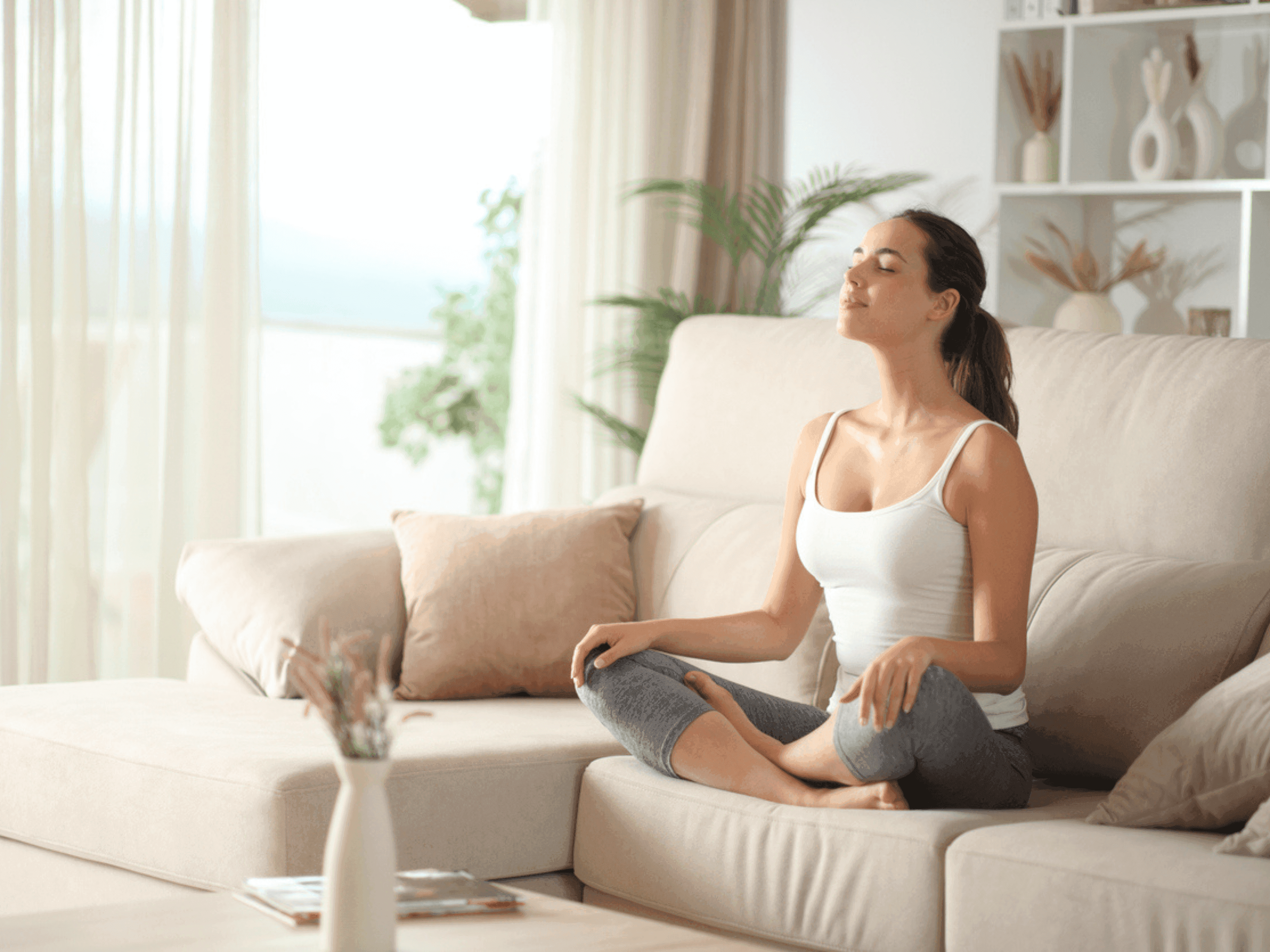
(6 Min Read) Stress can tighten the body and crowd the mind. Muscles grip and breathing becomes shallow, making it feel hard to switch off after work or study. Mindful movement gives you a way to release some of that tension and create pockets of calm in the day.
Yoga brings together postures, breathing, and awareness in a way that supports both body and mind. Some research suggests that yoga may help with stress and general wellbeing. For example, NHS guidance on yoga (1) notes that regular practice can support both physical and mental wellbeing, including stress management. If you have health concerns or an existing condition, you should always speak to a qualified professional before changing your routine.
Why stress shows up in your body
Hormones linked to stress can increase heart rate, tighten muscles, and change how you breathe. When this reaction repeats through the week, your shoulders and lower back may start to feel permanently braced.
Yoga and exercise can interrupt that pattern, and you can begin to feel the difference between useful activation and the kind of tension that keeps you wired long after the stressful moment has passed.
Can training sessions pair with yoga to ease stress?
Combining cardio sessions, brisk walks, or strength training help support cardiovascular health and build stress resilience. When you weave yoga and exercise together, you help the body unwind.
Each person will find a mix that suits them. Some enjoy a run followed by quiet floor practice, while others prefer the opposite, finishing with a more intense workout. It helps to notice how different combinations affect your focus and mood.
How can yoga flows after running ease stress?
Running, or other forms of cardio, can leave legs, hips, and the lower back feeling tight. Heading straight from that into a busy task can make the whole body feel compressed. Adding a short yoga flow after a run turns the cool down into part of your wider stress care plan.
You might try a sequence that includes:
• Standing poses that open the front of the hips
• Forward folds that lengthen the backs of the legs
• Twists that ease the spine
• Calming poses on the floor that bring the focus back to breathing
Linking breath to each movement helps your nervous system register that the hard work has finished. In this way, yoga and exercise work together, so your training leaves you feeling more grounded instead of more wound up.
Why try mindful stretching after strength training?
Strength sessions build power and support joint health. At the same time, lifting can create concentrated tension in specific areas such as shoulders, chest, or glutes. Mindful stretching afterwards, especially when yoga and exercise feature in the same plan, helps you reset your posture and release areas that worked hardest.
You could:
• Spend a few minutes on doorway stretches to open the chest
• Use a mat for hip openers, target glute and hip flexors
• Include slow neck and shoulder stretches between sets or right at the end
It gives your mind a clear transition between effort and rest, especially when yoga and exercise are planned as one block in your diary.
Can breath-led pacing change stressful workouts?
Breath can guide any session. When you pay attention to how you breathe during workouts, you gain another way to influence stress levels.
You might notice:
• Inhales that prepare the body
• Exhales that support the hardest part of a lift or pose
• Natural pauses at the top of a breath
This awareness builds with practice. As it grows, yoga and exercise begin to feel less like separate activities and more like parts of the same stress management toolkit.
How to plan weekly routines around recovery
Stress relief depends as much on recovery as it does on effort. Planning movement across the week helps you avoid pushing hard on consecutive days without giving your system time to reset. Recovery days do not mean doing nothing. Instead, they create space for movement that feels nourishing.
You might sketch out a pattern such as:
• One or two higher intensity sessions on non-consecutive days
• A longer walk where you focus on surroundings rather than pace
• A couple of slower practices focusing on stretching and breathing
On lighter days you can choose sessions that restore rather than deplete, supporting stress relief and respecting the demands of work, family, and life.
How do you listen to your limits during practice?
Movement for stress relief should feel supportive. Learning to listen to your limits protects you from injury and reduces the chance of leaving a session more tense than when you started. It means paying attention to your body throughout the session.
You can ask yourself questions such as:
• Does this sensation feel like healthy effort or a warning pain?
• Can I breathe steadily in this position?
• Do I feel more or less agitated than when I began?
Adjusting the load, pace, or range of motion in response to those answers keeps yoga and exercise aligned with self-care. You are more likely to maintain consistency when your body feels heard.
Which evening habits prepare you for sleep?
Evening routines have a strong influence on how easily you fall asleep. Heavy or highly stimulating workouts close to bedtime can make switching off more difficult. Choosing calmer evening sessions, such as yoga and exercise, supports rest.
An evening routine might include:
• A slow floor-based yoga sequence that focuses on hips and spine
• Spending time doing restorative poses supported by cushions or blankets
• Walking at a relaxed pace while paying attention to sounds and sensations
Dim light, quieter music, and slower transitions help the nervous system register that the day is drawing to a close. Aligning yoga and exercise with your natural sleep rhythm can make it easier to settle.
How does AMA support stress relief through activity?
Yoga is generally regarded as safe for healthy people when practised with appropriate guidance. Research summaries also note that yoga may support better sleep, though it is not a cure for medical conditions and may not suit every situation. For example, a systematic review of randomised controlled trials (2) reported that yoga practice was associated with reduced stress and improved mood in adults. You should always check with a healthcare professional before starting new programmes, especially if you have pain, cardiovascular issues, or another diagnosed condition.
With AMA, you can explore sessions across the different pillars with professionals who understand the links between movement, stress, and rest. Some focus on yoga flows that complement running or cycling. Others specialise in mindful stretching alongside strength training.
You remain in charge of your pace and format. You might start with one weekly session focused on yoga and exercise, then build towards a routine that also supports your nutrition and sleep. Sign up to AMA and book a session with a professional who matches your goals when you feel ready.
References
1. National Health Service. 2025 May 14. https://www.nhs.uk/live-well/exercise/pilates-and-yoga/yoga-with-lj/
2. Michaela C Pascoe, Isabelle E Bauer. 2015 Jul 13. https://pubmed.ncbi.nlm.nih.gov/26228429/
Ama’s products and services aim to support a healthy lifestyle, but they should not replace professional medical advice. Our content and media are not meant to diagnose, treat, or cure any medical condition.